
How to Search Criminal Dockets
Start at Search ARCourts when the Chicot case likely belongs to Chicot County Circuit Court. The portal accepts a Chicot participant name or a case number. A case number is the stronger key. Name searches work too. But initials, stray punctuation, and name changes can hide or scramble Chicot results. Before relying on any event, confirm the entry. It should name Chicot County, the right court, and a criminal case type.
A public Chicot search can return parties and the judge. It can also return filings, charges, dispositions, upcoming events, judgments, and some document links. Detail from every District Court is not guaranteed. Use this order:
- Identify the Chicot Circuit Court or the Dermott, Eudora, or Lake Village District Court department.
- Search the exact Chicot case number, or use the least ambiguous participant name.
- Open the Chicot County match and check the Chicot court, status, charges, and event history.
- Read later Chicot orders and future events before treating an old setting as current.
- Ask the Chicot filing clerk for a missing document or certified disposition.
Chicot County Criminal Docket Split
Not every criminal matter in Chicot County sits at one counter. Felonies are filed in Chicot County Circuit Court. The Chicot County Circuit Clerk keeps those files. The District Court departments in Dermott, Eudora, and Lake Village handle misdemeanors within their authority. They also take traffic and ordinance cases, initial appearances, and preliminary felony work. One incident can leave a trail in a lower court. A later Circuit Court docket may follow.
The split follows jurisdiction. A Chicot felony file belongs with the Circuit Clerk. A Chicot misdemeanor file stays with the District Court department that opened it.
Chicot County Criminal Docket Routing
Chicot case numbers and histories do not merge across courts. A preliminary matter in a District Court department can be followed by a separate CR-type Circuit Court case. The District Court directory explains the state's lower-court role. The Chicot filing clerk can confirm where the official record sits. Checking the court level first prevents a false conclusion after an empty statewide search.
Route the search by the court name on the latest notice. Even for one incident, the histories stay distinct. The District Court event history and the later Circuit Court docket are separate records.
What a Criminal Docket Shows
Think of the Chicot criminal docket as an index of court action. A header ties the Chicot event list to a court. It also lists the judge, case description, status, and number. The charge block may list an offense description and its classification. Each count can carry a separate disposition. The chronology can include the charging instrument, appearances, pleas, motions, and orders. It may also list hearing notices, trial events, sentencing, and appeal entries.
| Case Number | A court identifier that often includes the CR subject prefix, filing year, and sequence; copy the displayed form exactly. |
|---|---|
| Charge | The alleged offense and any statute or class supplied by the court; it is not proof of conviction. |
| Events | Dated filings, appearances, motions, orders, hearings, plea activity, and sentencing entries. |
| Bond | Bond amount, type, conditions, or forfeiture events when captured in the court data. |
| Disposition | The recorded outcome for a charge, read with the judgment or sentencing event. |
| Future Event | A coming setting that still requires confirmation with the filing court. |
These Chicot fields form one record. The case number and court fix identity, and the event rows show sequence. The disposition and judgment supply the outcome a charge alone cannot prove.
Chicot County Criminal Docket Outcomes
A Chicot charge is only an allegation. It is not the final result. Read the status and the disposition for each count. Then compare them with the later judgment or sentencing event. Pending, guilty or convicted, not guilty or acquitted, dismissed, transferred, appealed, and bond forfeiture mark different points or outcomes. A Chicot case with more than one count can hold more than one result.
Nolle prosequi means the prosecution formally chose not to proceed on a Chicot charge. That choice stays subject to the law and the court's order. It is not an acquittal or a conviction. A Chicot docket may also show a deferred or suspended result where authorized. The county publishes no official Chicot code sheet, so do not guess at short labels. When an entry is unclear, ask the Chicot clerk for the filed order. Do not expand an abbreviation from memory.
- Charge
- An alleged criminal offense, sometimes listed with a statute and class.
- Disposition
- The recorded outcome of a charge or case.
- Nolle prosequi
- A formal decision by the prosecution not to proceed on a charge.
- Bond forfeiture
- A recorded consequence when bond terms, often appearance, are not met.
Stages on a Criminal Docket
A Chicot County felony docket often opens with a charge or charging instrument, then records a first appearance and bond activity. Arraignment addresses the charge and the plea. Pretrial motions, discovery filings, and setting notices follow as needed. A plea or trial produces a verdict or disposition, with sentencing and possible post-judgment or appeal events later. Not every case hits every step. A dismissal can end the sequence early.
Docket flow: Filing › Arraignment › Pretrial › Plea or Trial › Disposition › Sentencing.
The Chicot event list runs in order, but later action can change an earlier entry. Read from the oldest event to understand the Chicot case. Then work backward from the newest to confirm current status. A Chicot order filed after a notice may reset a date, alter bond, or dispose of a count. The clerk's file holds the actual signed order behind each short docket entry.
Chicot County Criminal Docket Filing
Authorized users file Chicot documents through Arkansas Judiciary eFlex. That is not the public Chicot criminal docket. The official eFlex login shows the filing side of the system, while Search ARCourts is the public interface to available Contexte case information.
The Arkansas Judiciary identifies eFlex as its electronic filing route.
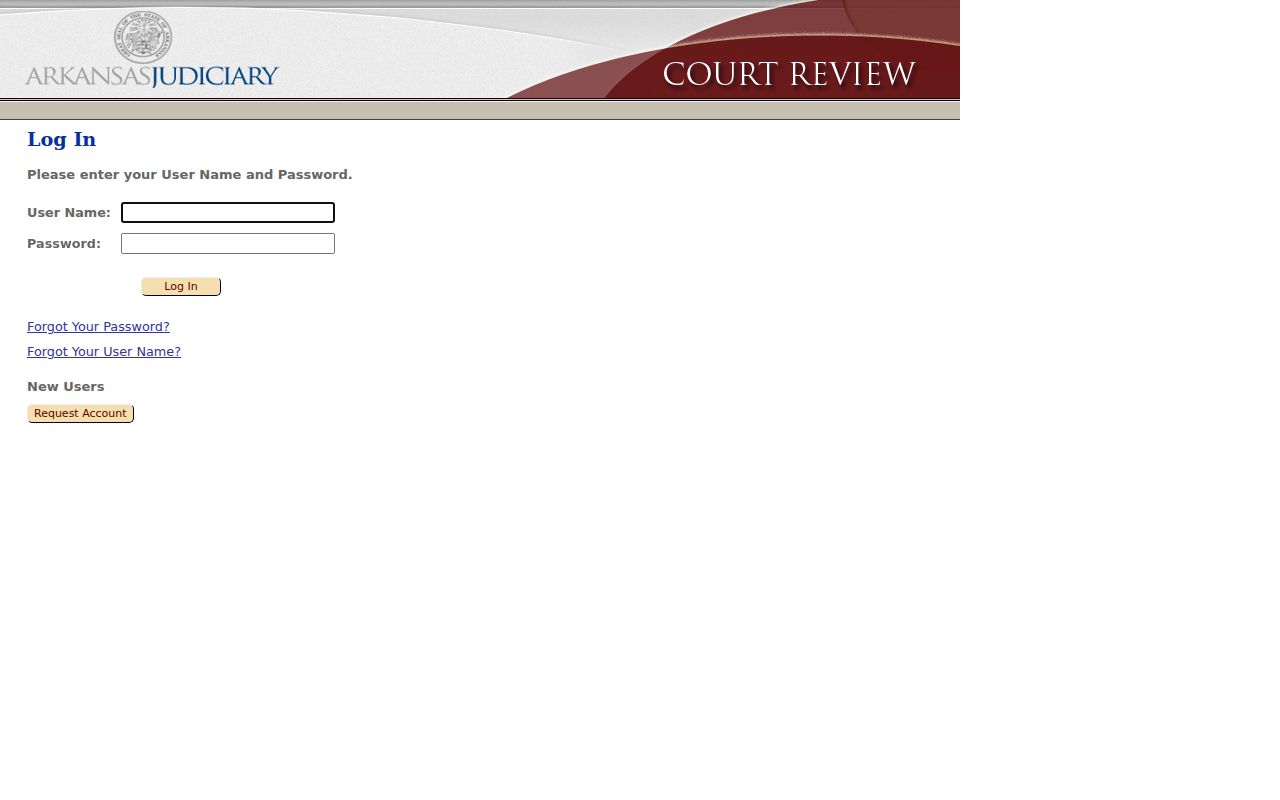
Why two tools for one Chicot County court docket? Filing through eFlex and searching as a member of the public are separate tasks. Anyone can look up a Chicot case in Search ARCourts without eFlex login credentials.
Chicot County Criminal Docket Public View
Administrative Order No. 21 sets the rules for electronic filing. A Chicot e-file can go through cleanly. It still becomes part of the court record only as the filing court allows. The public side of the Chicot docket depends on that court's data and its access rules. The filing itself does not control that.
What does that mean in practice? An event can show up on the criminal docket with no image attached. Read it as an index entry. The actual document sits with the Chicot Circuit Clerk. The Clerk controls the court file and can tell you what lies behind any public event. Need the paper itself? Request it from the Clerk rather than relying on the screen.
Which Court Holds Criminal Dockets
Felonies in Chicot County belong to the Chicot County Circuit Court, the general-jurisdiction trial court. Its Circuit Clerk keeps the circuit criminal file at 108 Main Street in Lake Village. The phone is 870-265-8010. A circuit criminal docket can carry a CR-type number. It may also show the assigned judge or division, charge and disposition fields, and the full run of circuit events.
Lower-level Chicot criminal matters go through the department that filed them. Dermott District Court answers at 870-538-3476. Eudora District Court answers at 870-355-2878. The Lake Village department runs its own Chicot docket. Its counter details are best confirmed through its published contact. Search ARCourts is a fair first stop. Only some District Courts put case information into the statewide system.
Note: a no-result screen does not mean no Chicot County criminal docket exists. That is especially true for older or lower-court cases.
Missing Chicot County Criminal Docket Documents
A Chicot filing can sit in the event history with no public PDF attached. That gap does not mean the filing vanished. It does not mean the whole Chicot case is sealed. Search ARCourts provides document links for only some public court records. Strict browser pop-up settings can also block a document that is actually there. Start by noting the exact event title and date. Then return to the portal with the correct case number.
Think of a missing image as an access question, not a result on the merits. Match the event title and date. Only then ask the Chicot clerk to pull the underlying filing.
Chicot County Criminal Docket Certified Copies
When the image will not load, call the office that keeps the record. That means the Circuit Clerk for a Chicot Circuit Court case. For a lower-level Chicot matter, it means the named District Court clerk. Ask whether the record lives in electronic form, on paper, on microfilm, or off site. Get the current copy fee and turnaround time before you commit. A screen print is not a certified court record. Only the clerk can issue a certified copy of a disposition, order, or judgment. That matters when formal proof is required.
Have the full case number ready when you call. Include the event name and the filing date. Those details matter. They let the Chicot clerk tell a request for the docket index apart from a request for a certified order.
Public Access and Sealed Criminal Dockets
Arkansas Supreme Court Administrative Order No. 19 sets the rules for viewing Chicot court records. It also caps what can appear online. Search ARCourts states plainly that nonpublic Chicot information stays off the portal. Redaction is routine. Juvenile detail can be withheld. A Chicot court order or statute can also wall off a sealed criminal record. So internet access is narrower. It never matches what an authorized person sees at the Chicot filing court itself.
Sealing in Chicot County works by order, not by assumption. A dismissal alone does not seal the docket. The Comprehensive Criminal Record Sealing Act, Ark. Code Ann. §16-90-1401 et seq., lays out the process for qualifying Chicot matters. Ark. Code Ann. §9-27-309 covers juvenile confidentiality. Anyone seeking access or sealing should rely on the official statute and court forms. Then follow the filing court's directions.
Key rules: Administrative Order No. 19 controls public court-record access, the sealing statutes govern qualifying criminal records, and juvenile law limits public disclosure.
An absent PDF is not proof of sealing. Verify the case status and the record's availability with the Chicot County clerk that maintains it.
Latest Chicot County Criminal Docket Setting
Old notices can linger in a Chicot criminal event history after a continuance or reset. So find the newest future event first. Then read every later order and notice before relying on any single entry. A Chicot setting called arraignment, pretrial, docket call, motion hearing, trial, or sentencing each serves its own purpose. Note too that the listed time may open a Chicot session. It may not mark the exact minute your case is called.
Before any consequential appearance, confirm the basics. Check the date, time, location, event type, and whether remote appearance is allowed. The judge runs the calendar. The clerk records it. Search ARCourts republishes whatever data is available. If a notice and the portal conflict, do not guess which one wins. Call the Circuit Clerk or the right District Court department. Ask which later signed order controls. The full Chicot County court calendar reference covers resets and setting fields in more depth.